Staggered thermal processing of multi-component salmon dinner
- Yield
- 6 servings
- Oven to table
- approximately 50 min
- Trays
- 2
Abstract
The simultaneous preparation of multiple oven-roasted dishes presents a challenge due to differences in their required cooking times. Potatoes, broccoli and salmon typically require 45, 15 and 10 minutes respectively, making simultaneous oven entry unsuitable for achieving optimal doneness across all components. We propose a staggered-entry protocol to synchronise cooking completion. Potatoes are roasted for 30 minutes before broccoli is introduced, followed by salmon coated in garlic, shallot and lemon butter during the final 10 minutes. Experimental results demonstrate the feasibility of serving all three components simultaneously, with six participants successfully fed.
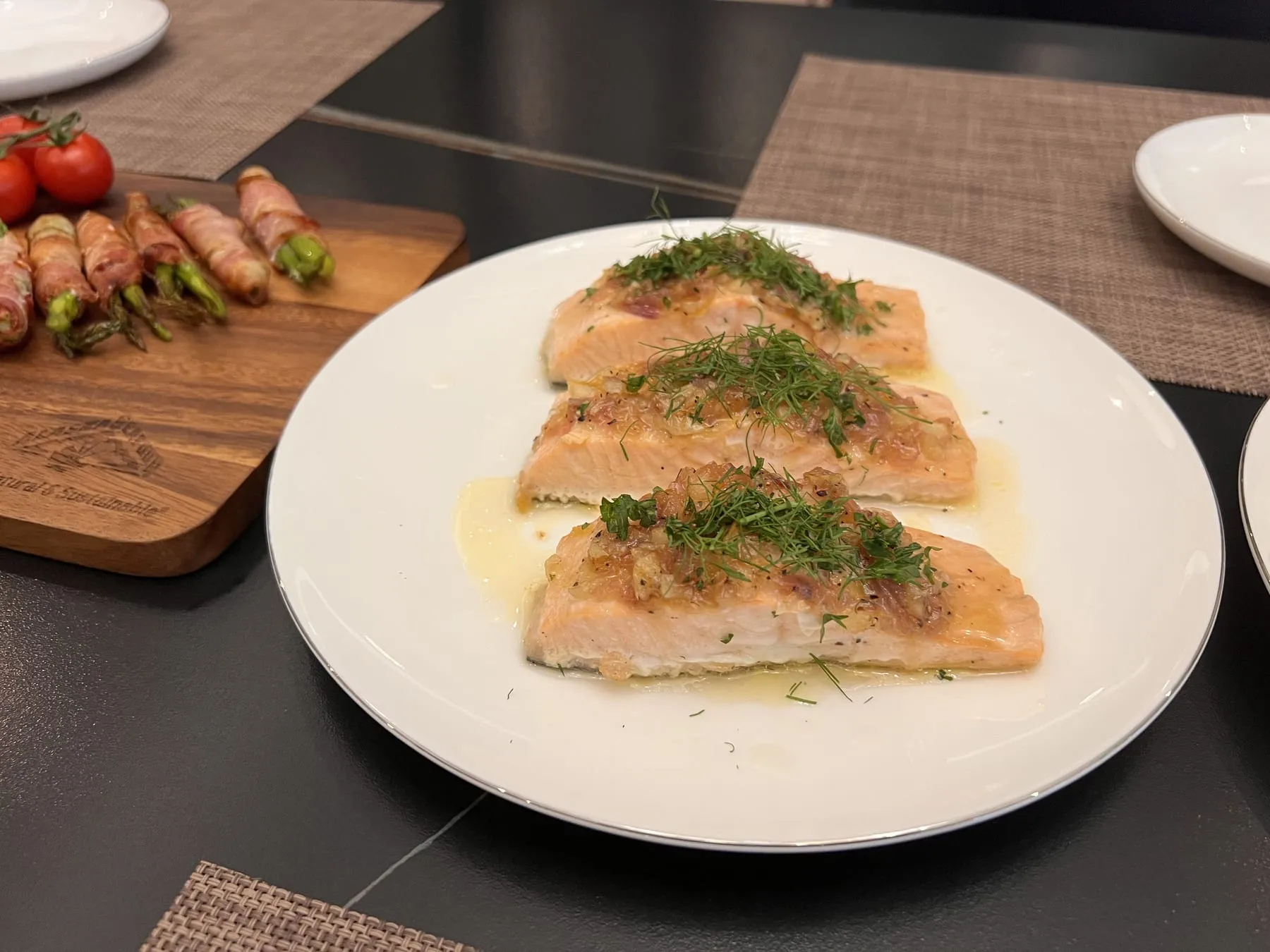
1. Materials
Salmon. 6 fillets (1.5–2 cm thick), 90 g butter, 1 shallot and 6–8 garlic cloves (both finely chopped), 2–3 tbsp dry white wine, 1–2 tsp honey, zest of 1 lemon, salt and pepper.
Potatoes. 1.2–1.5 kg, skinned and cut into 2–3 cm pieces, 2–3 tbsp olive oil, 1 tbsp chopped rosemary, salt and pepper.
Broccoli. 1 large head cut into florets, 1 tbsp olive oil, salt and pepper.
To finish. Juice of 1–2 lemons and about 2 tbsp each of chopped dill and parsley.
Apparatus. Two trays, one lined for the fish, and a small saucepan.
2. Schedule
Potatoes
Broccoli
Salmon
Cook
3. Method
- t = 0: Start with the potatoes by heating the oven to 220°C (200°C fan). Toss the potatoes with the oil, rosemary, salt and pepper and spread them in one layer, cut sides down. Roast for 30 minutes.
- t = 0–20: Next, the broccoli; cut the broccoli into florets. Chop the shallot, garlic and herbs, and zest the lemon. Pat the salmon dry, lay it skin-side down on the lined tray and season lightly.
- t = 20–27: For the sauce, melt the butter over low heat. Add the shallot and cook for 2–3 minutes, until soft. Add the garlic for 30 seconds. Add the wine and let it bubble for 1–2 minutes. Take the pan off the heat and stir in the honey, zest and pepper.
- t = 30–35: Turn the potatoes and add the broccoli to the same tray, tossed in its oil. Drop the oven to 200°C (180°C fan). Spoon the sauce over the salmon, making sure each fillet gets some garlic and shallot, then put it in.
- t = 42: The salmon should be ready in about 8 minutes.
- Finish. Rest the salmon for 3–5 minutes. Add lemon juice, dill and parsley, then spoon the butter from the tray back over the fillets. Give the vegetables lemon and a little salt.
4. Results
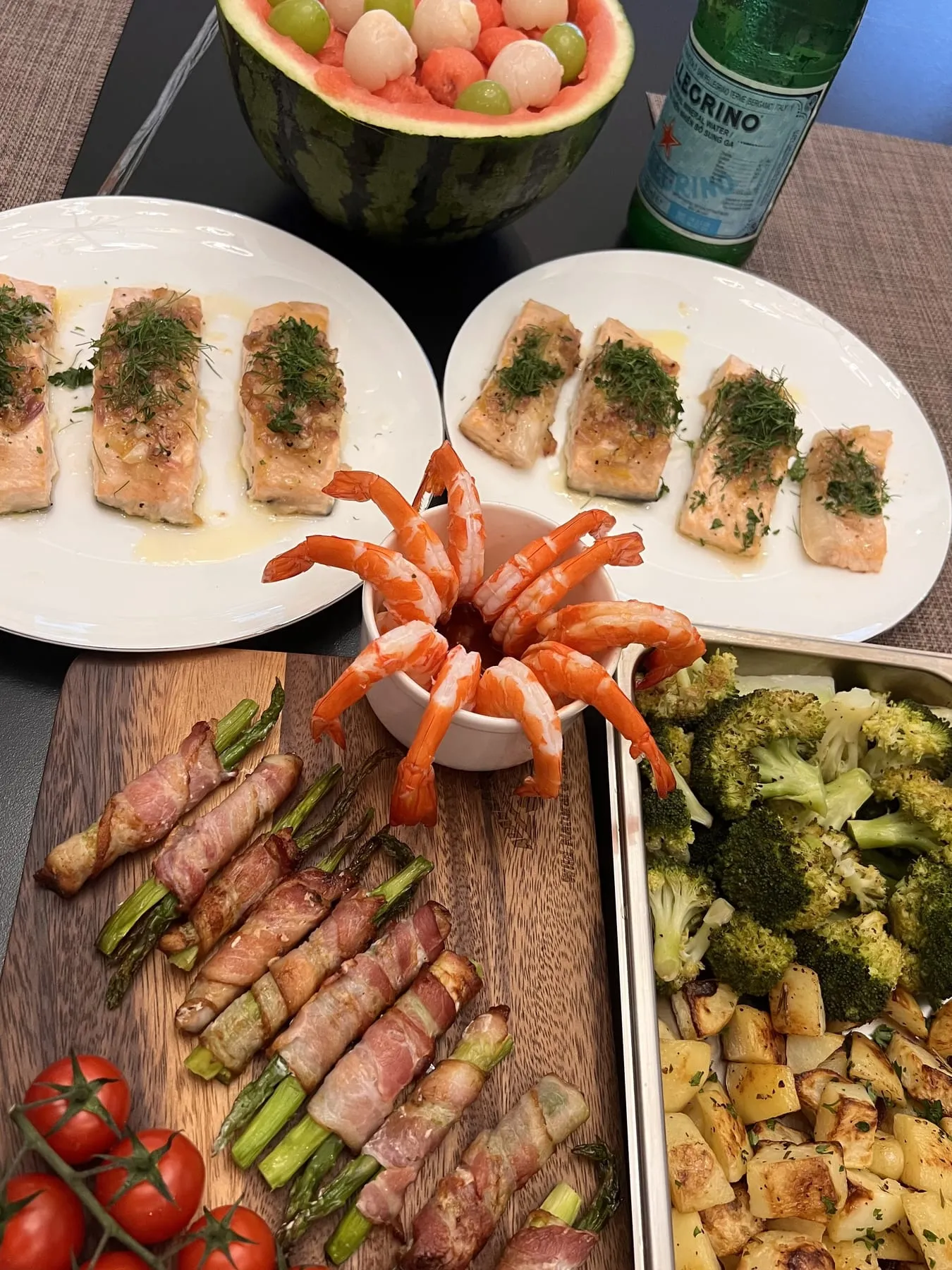
5. Discussion
Cooking time is determined by thickness, not the number of fillets. If unsure just ask ChatGPT.
Lemon is added twice: The zest goes into the sauce, while the juice goes on at the end.
When placing the potatoes, try not to have extremely angular or pointy sides face up because those burn more easily.
6. Conflict of interests
Competing interest is declared.